
Psalm 23: The Full Text, What Each Line Means, the Latin, and the Song
The Lord is my shepherd. Six verses, three thousand years, still the first prayer people reach for.
Psalm 23, King James Version
The LORD is my shepherd; I shall not want.
He maketh me to lie down in green pastures: he leadeth me beside the still waters.
He restoreth my soul: he leadeth me in the paths of righteousness for his name's sake.
Yea, though I walk through the valley of the shadow of death, I will fear no evil: for thou art with me; thy rod and thy staff they comfort me.
Thou preparest a table before me in the presence of mine enemies: thou anointest my head with oil; my cup runneth over.
Surely goodness and mercy shall follow me all the days of my life: and I will dwell in the house of the LORD for ever.
Psalm 23, the song
We put it over Miami bass. Psalm 23 by Infinite Underground, out now on Holy Laratta Records, the second record in the Faith and Bass series after Vade Retro Satana.
What Psalm 23 means, line by line
The Lord is my shepherd; I shall not want. David wrote this, and David kept sheep before he was king. A shepherd in his world was not a soft image. It meant the one person standing between the flock and everything that wanted to eat it. "I shall not want" is not a promise of comfort, it is a statement of who is responsible for you.
Green pastures, still waters. Sheep will not drink from moving water and will not lie down unless they feel safe. The shepherd has to find the quiet pool and clear the ground. The line is about God doing the work you cannot do for yourself.
He restoreth my soul. The Hebrew is closer to "brings me back." A sheep that wanders off does not find its own way home.
The valley of the shadow of death. The most quoted line in the psalm, and the turn in it. The psalm does not say the valley is avoided. It says you walk through it, and the reason you are not afraid is three words: thou art with me. The rod is for the wolf, the staff is for the sheep.
A table in the presence of mine enemies. The image shifts from shepherd to host. God does not wait until the enemies are gone to feed you. The oil is the welcome given to an honored guest, and the cup runs over because the host is not measuring.
Goodness and mercy shall follow me. The verb is "pursue." You are being chased down by goodness. And the psalm ends where every Catholic funeral ends, in the house of the Lord, forever.
Psalm 23 in Latin
Dominus regit me, et nihil mihi deerit
The Lord rules me, and I shall want nothing
In the Latin Vulgate this is Psalm 22, because the Greek and Latin Bibles number the psalms differently from the Hebrew. The opening line, Dominus regit me, et nihil mihi deerit, is the one carved on church walls and sung at Vespers. The valley line is Nam et si ambulavero in medio umbrae mortis, non timebo mala, quoniam tu mecum es. "For even if I walk in the midst of the shadow of death, I will fear no evil, because you are with me."
Why Psalm 23 is read at funerals
Because it is the only psalm that walks you through death and out the other side in six verses. It is in the Catholic funeral rite, it is the psalm most Protestants can recite from memory, and it is what gets read at the bedside when no one knows what else to say. Jesus took the image for himself: "I am the good shepherd: the good shepherd giveth his life for the sheep" (John 10:11). The shepherd of Psalm 23 turned out to be the Lamb.
The Lamb
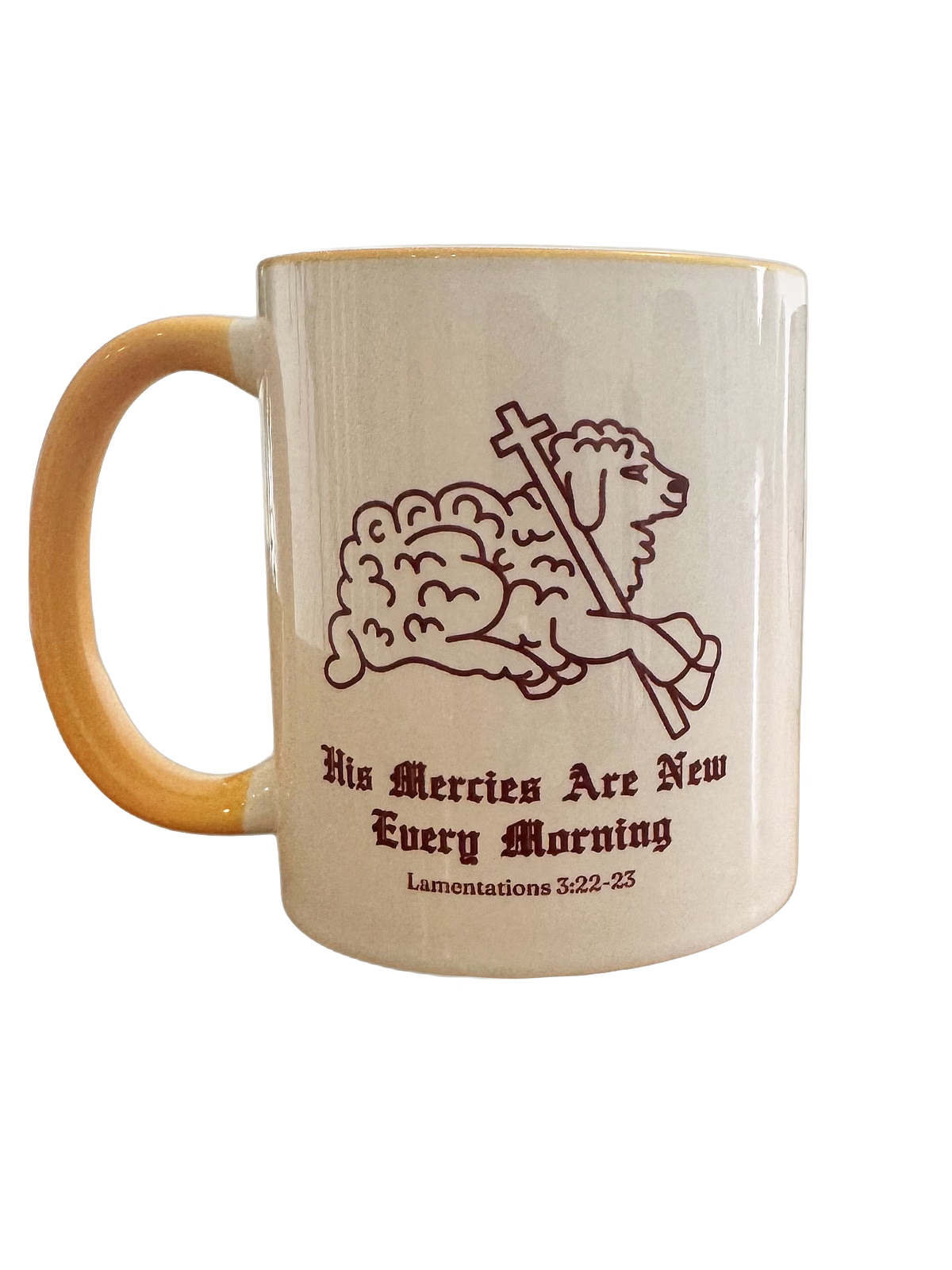
That is why the lamb is the first mark we ever made. John the Baptist's line, "Behold the Lamb of God" (John 1:29), is on the hat. The shepherd who lays down his life and the lamb who is sacrificed are the same person, and Psalm 23 is where you first meet him. Read the story of the Lamb.


"Yea, though I walk through the valley of the shadow of death, I will fear no evil: for thou art with me."Psalm 23:4